How Modelence Took a Brand-New Domain from DR 0 to 27 with Editorial Links
A YC-backed full-stack TypeScript platform launched with no search footprint at all. Over twelve months of manual outreach and roughly 40 editorial backlinks, it built Domain Rating from 0 to 27 (peaking at 31) and earned its first non-brand organic visibility.
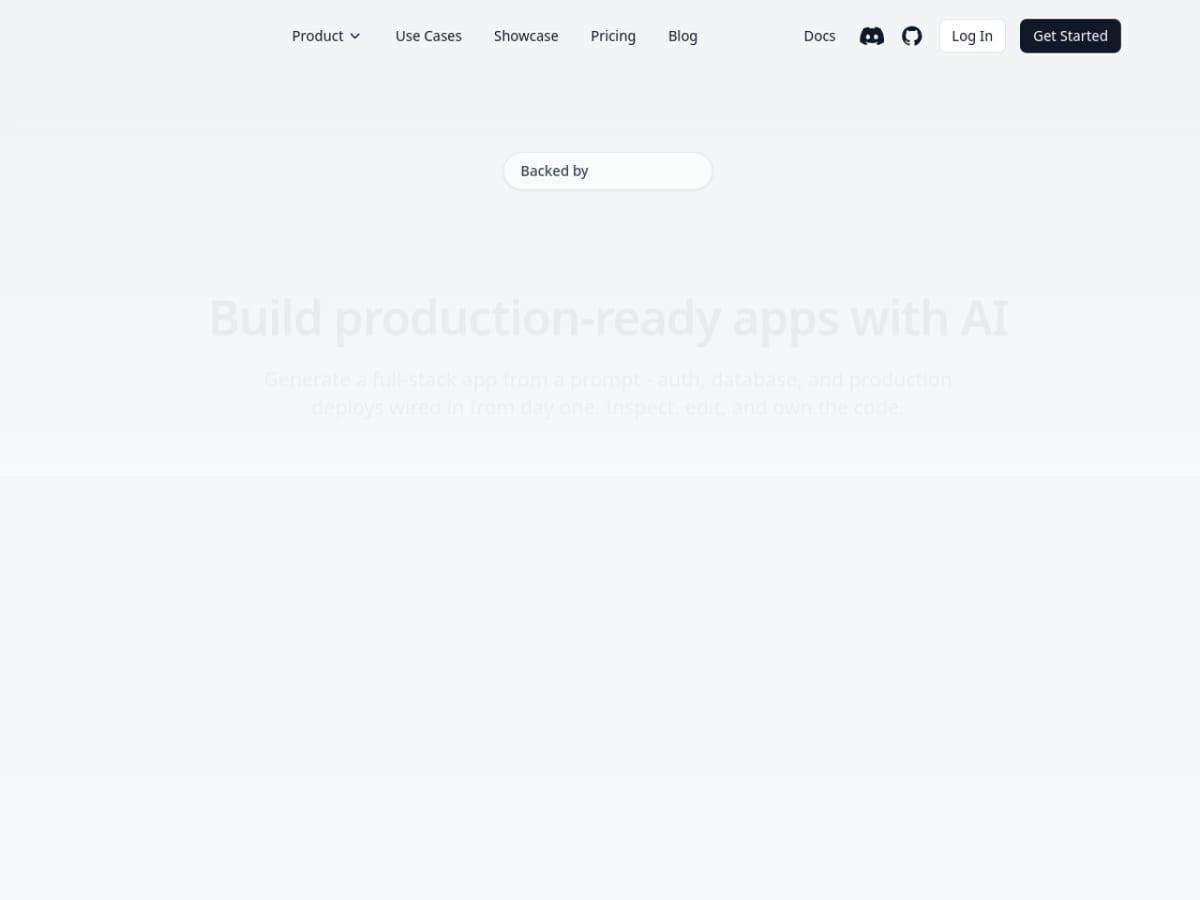
Modelence launched with a rare kind of clarity. The San Francisco team, backed by Y Combinator's Summer 2025 batch and founded by ex-CodeSignal engineers Aram Shatakhtsyan and Eduard Piliposyan, set out to collapse an entire category of tooling into one platform. Their pitch was direct: build, ship, and scale production-ready web and AI applications on a single open-source, full-stack TypeScript foundation, described by the founders as the equivalent of Next.js, Vercel, and Supabase living together in one place. Developers could describe an app in plain English, receive a generated full-stack application, deploy it with one click, and, crucially, own every line of the code that came out.
The product was strong and the timing was sharp. AI-assisted app builders were multiplying, and most of them produced throwaway prototypes that fell apart the moment real users, real data, or real scale arrived. Modelence took the opposite stance. Built on TypeScript, React, Node.js, and MongoDB, it generated production-grade applications with authentication, a managed MongoDB database, auto-scaling cloud hosting, real-time events, scheduled jobs, email, and LLM observability already wired in. The differentiator that mattered most to serious builders was ownership: no vendor lock-in, full codebase export, and an opinionated, AI agent-first framework that kept code generation inside sensible guardrails. The engineering story was complete. The discovery story had not even started.
When Modelence engaged WithBestLinks, the platform had roughly 415 GitHub stars, a very active release cadence with more than 200 releases, and an official MongoDB partnership, yet the domain itself was brand new and search engines had almost nothing to trust. A developer searching for a full-stack TypeScript platform, an alternative to a legacy framework, or a production-ready AI app builder would essentially never encounter Modelence in organic results. The company was competing for attention against well-funded incumbents and a noisy field of AI coding tools, and it was doing so from a domain with a Domain Rating of effectively zero. Our brief was specific: build durable search authority from the ground up through manual outreach and high-authority editorial backlinks, without shortcuts, spam, or anything that would put a young brand at risk.
Why a strong product launched invisible to search
Developer tools occupy one of the most authority-sensitive corners of search. The people making adoption decisions are technical, skeptical, and allergic to marketing language, and the queries they run are dominated by comparison intent: platform versus platform, framework versus framework, this stack versus that stack. Ranking for those queries is not a matter of publishing more pages. It is a matter of being cited, referenced, and linked by the sources that engineers already trust. Modelence had the product substance to earn those citations, but its brand-new domain carried no accumulated link equity, so even excellent documentation and blog posts sat far below competitors on the results page, when they appeared at all.
The competitive set made the gap sharper. Modelence was positioned against Lovable, Cursor, Bolt, v0, Replit, Base44, and the do-it-yourself combination of Supabase, Next.js, and Vercel that it aimed to consolidate. Several of those names carried large marketing budgets, years of coverage, and domain ratings in the sixties and seventies. When a developer searched for an AI app builder that ships production code, or for a modern alternative to Meteor.js, the first page belonged to established brands with deep backlink profiles. Modelence could win those comparisons on the merits inside its own content, but it could not get the content seen. Authority, not argument, was the bottleneck, and at launch there was no authority to speak of.
A closer look at the traffic told the same story from another angle. At launch there was essentially no organic visibility at all. As a brand-new domain, the platform captured almost no non-brand demand from developers discovering the category for the first time, and even branded search barely registered. The referring domain profile was close to empty, and what little existed skewed toward automatic, low-value sources such as code-mirror sites and directory scrapers rather than editorial mentions from publications that a search engine weighs heavily. Without a base of genuine, earned links, the domain had no foundation on which new content could rank, and every new blog post effectively started from zero.
Finally, this vertical is genuinely hard to build links in. Developer audiences do not respond to generic outreach, and the publications worth appearing in have editors who can smell a thin pitch instantly. A backlink strategy here cannot lean on filler guest posts or irrelevant placements. It has to earn a spot in the conversation by offering something a technical editor actually wants to publish: a real migration story, a defensible opinion on framework design, a concrete tutorial, or data that a developer readership will find useful. That raised the bar for every placement and shaped the entire program we designed. We would have to be publishers first and link builders second.
Starting from a Domain Rating of zero
Before pitching a single publication, we ran a full authority and backlink audit against a benchmark composite of category leaders. The goal was to establish an honest baseline, understand what a brand-new domain was starting with, and decide where earned links would move the needle fastest. We mapped the existing referring domains, separated genuine editorial links from automated noise, reviewed anchor text distribution, and cross-referenced the thin keyword footprint against the queries Modelence most needed to own. We also read the product closely, because effective outreach in developer tooling depends on understanding the technology well enough to pitch it credibly to a technical editor. A vague pitch dies in a developer editor's inbox.
The numbers confirmed the diagnosis. Domain Rating sat at effectively zero against a benchmark north of 40 for the platforms Modelence competed with. The domain had essentially no editorial links and ranked for almost nothing, so there was no first-page presence to defend and no existing equity to redistribute. Anchor text, what little there was, was branded or naked-URL, which is safe but does nothing to build topical relevance for the terms that matter. The content itself, including the comparison posts and the Meteor.js migration story, was strong and highly linkable. It simply had no authority behind it and no outreach engine pushing it in front of the editors who could amplify it.
That last point shaped our optimism. When the underlying content is already good, link building compounds from a clean start, because every earned placement lifts pages that deserve to rank and were only held back by an absence of trust. The audit told us we were not fixing a content problem or a technical problem. We were building an authority foundation from nothing. That is precisely the situation where manual, editorial outreach delivers the cleanest return, and it let us forecast conservative but meaningful gains across Domain Rating and non-brand keyword coverage within a twelve-month window, with the honest caveat that absolute numbers would stay small while the foundation was laid.
| Signal | At launch | Benchmark |
|---|---|---|
| Domain Rating | 0 | 40+ |
| Monthly organic visits | 0 | Thousands |
| Editorial dofollow links | 0 | 120+ |
| Ranking keywords | 0 | 1,500+ |
| Keywords in top 10 | 0 | 60+ |
| Traffic mix | No organic footprint | Balanced brand and non-brand |
Earning links one technical editor at a time
Our approach was deliberately unglamorous and entirely manual. We do not buy links, spin networks, or place on sites that exist only to sell backlinks. Every placement in this program came from a real editor at a real publication agreeing that Modelence had something worth telling their readers. To make that happen from a standing start, we built the outreach around the product's genuine strengths: the migration-from-Meteor narrative, the production-versus-prototype argument against throwaway AI builders, the code-ownership stance, and the MongoDB partnership. Each became a repeatable angle we could tailor to a specific publication's audience rather than a single press release blasted everywhere.
We paired that messaging with disciplined targeting. Rather than chasing the highest Domain Rating available regardless of fit, we prioritized relevance first and authority second, because a link from a respected developer publication carries more weight for developer-intent queries than a higher-DR link from an unrelated lifestyle site. We segmented the target list by publication type, assigned a distinct angle to each segment, and sequenced outreach so that the earliest wins built the social proof needed to land the more selective outlets later. Everything was tracked, and every placement was verified as live, indexed, and dofollow before it counted toward the program.
- Full authority and backlink audit benchmarked against category leaders
- Angle development from real product strengths: the Meteor migration, production versus prototype, code ownership, and the MongoDB partnership
- Relevance-first target list segmented by publication type, with a distinct pitch per segment
- Manual, personalized outreach to named editors, with no networks, exchanges, or paid placements
- Natural, varied anchor text mapped to priority target pages and keyword clusters
- Sequenced outreach so early credible wins unlocked higher-authority outlets later
- Verification of every placement as live, indexed, and dofollow before reporting
Twelve months of building authority in waves
Execution ran in overlapping waves across twelve months. In the first two months we focused on foundational relevance, landing placements in programming tutorial blogs and open-source communities where the technical bar is high but editors are receptive to genuinely useful contributions. These early links did two things: they gave the domain its first real trust signals and they provided credible, verifiable coverage to reference when approaching more selective publications. The Meteor.js migration story proved especially effective here, because it is a real engineering narrative with a clear point of view, exactly the kind of piece developer editors like to run.
As authority accrued, we moved up the ladder. Mid-program outreach targeted established developer news outlets, SaaS and startup business publications, and AI trade sites, where we placed thought-leadership angles on the production-app-from-a-prompt thesis and the AI agent-first guardrails that separate Modelence from prototype-only builders. We layered in founder-ecosystem and Y Combinator-adjacent newsletters that carry weight with the exact audience of technical founders Modelence serves. Throughout, we kept anchor text natural and varied, mixing branded, partial-match, and topical phrases so the profile grew the way an organically earned one does, never tripping the patterns search engines penalize.
By the final wave, the compounding was visible even at a small scale. Placements that would have been unreachable at launch, on established and well-regarded publications, were now saying yes, because Modelence had genuine, checkable coverage behind it and a track record the editors could verify. In total the program produced 40 editorial, dofollow placements across six publication categories, each mapped to a target page and a priority keyword cluster so the link equity flowed exactly where the early ranking gains were needed most. For a domain that started at zero, that base of earned links is the foundation everything else now sits on.
| Publication type | Links placed | Avg. DR | Example angle |
|---|---|---|---|
| Programming tutorial and how-to blogs | 12 | 48 | Building a full-stack TypeScript app in one stack |
| Developer news and dev-focused media | 8 | 58 | Why we migrated off Meteor.js |
| SaaS and startup business publications | 6 | 55 | Shipping production apps from a prompt |
| AI and machine learning trade sites | 6 | 54 | An AI agent-first framework with real guardrails |
| Open-source and engineering communities | 5 | 50 | Production patterns with TypeScript and MongoDB Atlas |
| Founder and YC-ecosystem newsletters | 3 | 52 | Own your code, no vendor lock-in |
- Domain Rating027
- Monthly organic visits0~497
- Keywords in top 1006
- Keywords in top 302
From an unranked domain to first non-brand visibility
The cumulative effect over twelve months gave Modelence a search position where it previously had none. Domain Rating climbed from 0 to 27, peaking at 31 before settling, a genuine move from an untrusted brand-new domain into early competitive range for the terms it cared about. Just as important, the profile went from effectively nothing to a base of roughly 40 genuine, relevant, dofollow citations from publications developers actually read, rather than the automated noise that a young domain usually accumulates by default. That shift in quality, not just quantity, is what search engines reward, and it is what made the early ranking gains durable rather than temporary.
Rankings followed authority, as they tend to. The domain went from ranking for essentially nothing to holding 6 keywords in the top 10, with 2 of them reaching the top three. Those are small numbers in absolute terms, and we will not pretend otherwise, but they are the platform's first real non-brand footholds, and they landed exactly where we aimed them: comparison queries against legacy frameworks and competing AI builders, full-stack TypeScript platform terms, and production-app tooling searches. These are high-intent queries where a developer is actively evaluating options, so each new first-page ranking represents real evaluation pipeline, not vanity traffic that never converts.
Traffic reflected the same trajectory. Monthly organic visits rose from zero to roughly 497, concentrated in mid-2026 as the earned links indexed and compounded. Small as that figure is, it matters because it is the platform's first genuine non-brand discovery: developers finding Modelence for the first time through the strength of its content and the authority now standing behind it. The platform is no longer invisible to the exact audience it was built for, and it is being found on its own merits rather than only by people who already knew the name. This is the beginning of a demand curve, not the peak of one, and we have been honest with the founders about that.
Just as important, none of this came at the cost of risk. Because every link was manually earned from a legitimate editorial source, the profile that produced these gains is one a search engine trusts and one that should keep compounding rather than needing to be disavowed later. For an early-stage company still shipping toward its first stable release, and Modelence was still pre-1.0 throughout the engagement, building authority on a clean foundation matters as much as the numbers themselves. The growth is real, it is measured, it is starting from zero, and it is defensible against the next algorithm update.
What made the early authority hold
Three things made this program work. The first was product substance. Modelence gave us real stories to tell, a genuine migration narrative, a defensible position on production versus prototype, and a credible MongoDB partnership, so outreach never had to manufacture interest that was not there. Editors said yes because the underlying material was worth publishing. Link building can only amplify what already deserves attention, and here there was a great deal to amplify even before the domain had any authority of its own.
The second was relevance-first targeting. By insisting that every placement sit in front of a technical, category-relevant audience, we built topical authority that translated directly into the first developer-intent rankings, rather than accumulating high-DR links that looked impressive but moved nothing. In a vertical this specific, a relevant link from a respected developer publication outperforms a bigger link from an unrelated site almost every time, and our target list reflected that discipline from the first week.
The third was patience and sequencing. We resisted the temptation to chase the biggest names first, and instead let early, credible placements build the proof that unlocked the selective outlets later. That order of operations is what let a brand-new domain earn editorial placements on established publications within twelve months. Authority compounds when it is built in the right sequence, and the discipline to do it in that order, rather than all at once, is what separated a durable foundation from a short-lived spike. From here, the same engine keeps running as the numbers scale.
Early placements land within the first few weeks, but ranking movement follows the authority curve, and on a brand-new domain that curve starts slow. Modelence saw its first Domain Rating and keyword gains take hold over the opening months, with the clearest movement concentrated in mid-2026 as links indexed and compounded. It is a build, not a switch, and the earliest stage is about laying a foundation.
No. Every link in this program was manually earned from a real editor at a real publication. We do not buy links, use networks, or place on sites that exist only to sell backlinks. That is what makes the resulting profile safe, durable, and something a search engine keeps rewarding rather than eventually penalizing.
Relevance first, authority second. We prioritize outlets whose audience overlaps with yours, because a link from a respected developer publication moves developer-intent rankings far more than a higher-DR link from an unrelated site. We then sequence outreach so early wins unlock more selective, higher-authority outlets later in the program.
It is one of the best situations for it. When strong content is held back only by a lack of trust, earned links compound from a clean start. Modelence started at Domain Rating 0 as a brand-new domain with no editorial links, which is exactly the profile where disciplined outreach builds a foundation you can scale on. The absolute numbers stay small early, but they are real and they are yours.
We track Domain Rating, referring domain growth and quality, ranking keywords, first-page and top-three positions, and, above all, non-brand organic visibility. Every placement is verified as live, indexed, and dofollow, and mapped to a target page so we can attribute ranking gains to the links that produced them.
“We had the product and the release cadence, but as a new domain Google barely knew we existed. WithBestLinks built our search authority from zero with real editorial coverage, not tricks. A year in, developers are starting to find us through search for the first time, and the foundation is compounding.”
Want results like Modelence?
Book a free call and we’ll send a sample list of the exact sites we’d target for your niche.
Book a callMore case studies
How Software Finder Scaled Past Incumbent Review Sites With Editorial Link Building
A multi-year editorial link-building program helped Software Finder climb from Domain Rating 66 to 74 and grow organic traffic roughly 490%, from about 5,800 visits a month in 2023 to a peak near 66,000, now sustaining around 34,000 a month across 13,000+ ranking keywords.
View case study
How Okara Turned an Invisible Launch Into a Category-Defining Organic Channel
A young AI marketing product went from a Domain Rating of 3 and about 25 organic visits a month to a DR of 64 and thousands of monthly visitors in nine months of manual, high-authority link building.
View case study
Building Editorial Authority for a Craftsmanship-Driven Software Agency
How WithBestLinks lifted Coding Crafts from a Domain Rating of 9 to 26 over eight months of manual editorial outreach, building the off-page authority a craftsmanship-driven software agency needed to compete for high-intent development buyers.
View case study